Polling shows public concerns on affordability and fairness impact CEOs
Axios · July 31, 2026Original source ↗
What happened
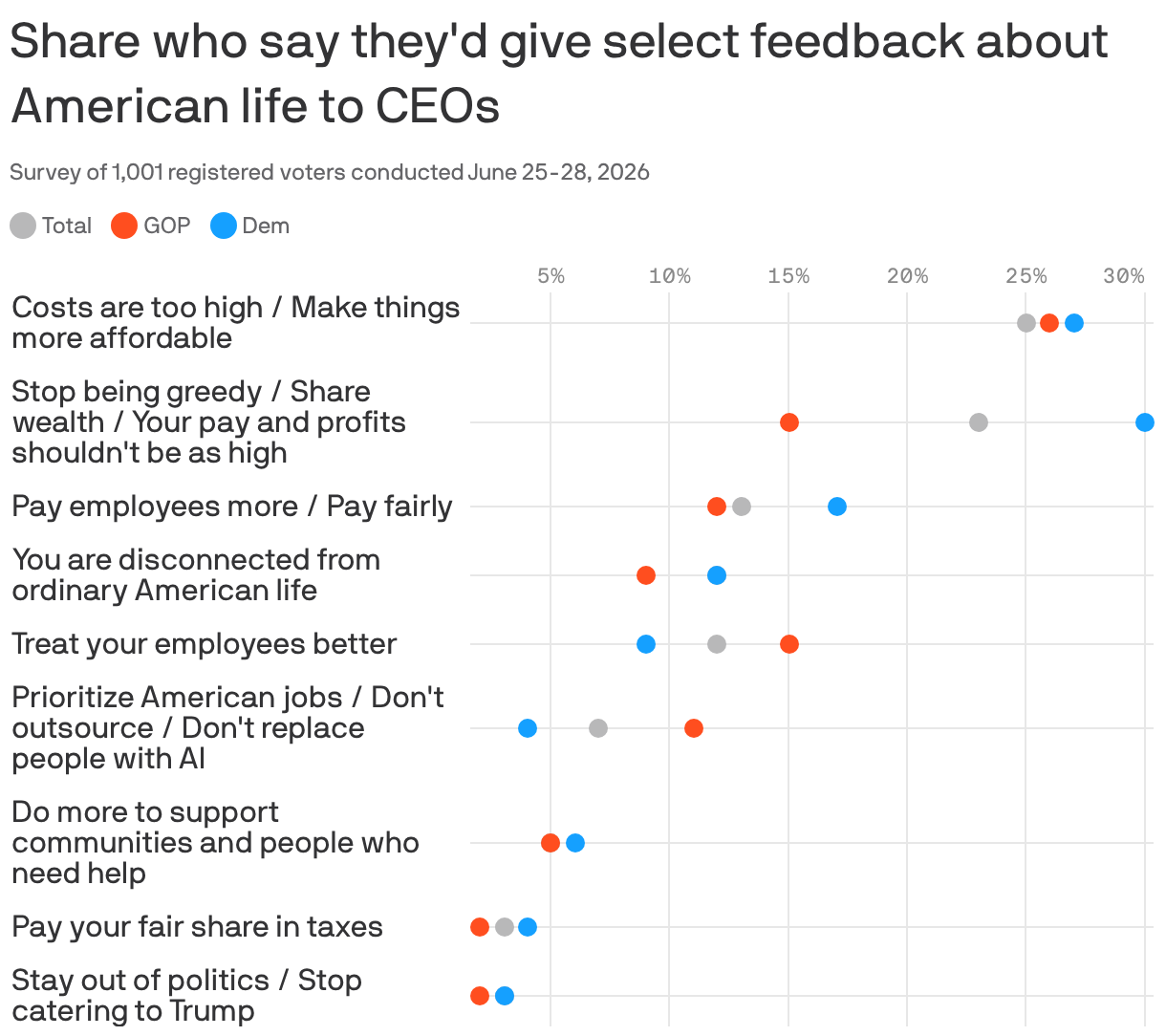
Polling data from Brunswick Group and Echelon Insights indicates that 41% of Americans view affordability as the biggest issue facing the country. Additionally, many respondents expressed concerns over high costs and inequality, highlighting a disconnect between perceptions of the economic system's benefits for large companies versus individuals.
Why it matters
The findings suggest that corporate leaders need to address public trust and concerns about economic fairness.
How this story affects people
How does this story affect you if you rent your home?
As affordability is viewed as a major issue, renters may see increased pressure on corporate leaders to address housing costs. This could lead to changes in policies or initiatives aimed at improving rental affordability.
How does this story affect you if you are an hourly worker?
Hourly workers may be directly affected by corporate responses to public concerns about economic fairness. If CEOs take action to improve wages or benefits, it could lead to better financial stability for these workers.
How does this story affect you if you are a small business owner?
Small business owners might experience changes in the economic landscape as larger companies respond to public concerns about fairness. This could result in increased competition or shifts in consumer spending patterns based on perceptions of corporate responsibility.
Want this written about you?
The breakdown above is the shared version, for kinds of people. In the app, Ripple uses your job, your city, and your family, then writes that part about you.
Get your Ripple