Rising Cyclosporiasis Cases Reported in Five U.S. States
Axios · July 23, 2026Original source ↗
What happened
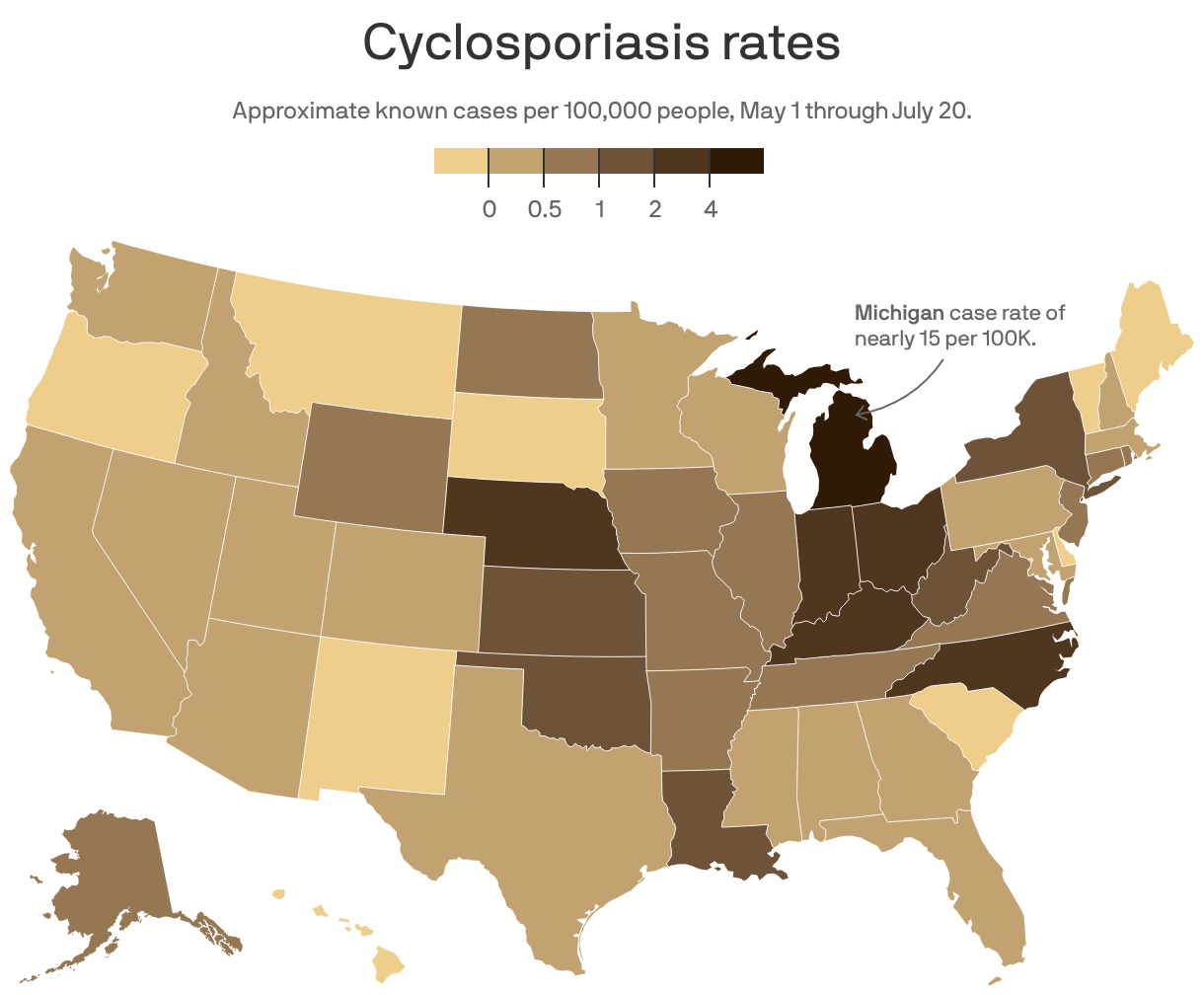
The CDC reports 4,173 confirmed cases of cyclosporiasis in the U.S. from May 1 to July 20, surpassing total cases from 2025. The outbreak is particularly concentrated in Michigan, Ohio, Indiana, Kentucky, and West Virginia. Investigations are focusing on contaminated iceberg lettuce as a potential source.
Why it matters
Increased rates of cyclosporiasis highlight public health concerns regarding food safety and infection control.
How this story affects people
How does this story affect you if you rent your home?
Renters may be concerned about food safety in their local grocery stores, especially if they purchase iceberg lettuce. Increased cases of cyclosporiasis could lead to heightened awareness and scrutiny of food sources, affecting what renters choose to buy.
How does this story affect you if you are a parent?
Parents may need to be more vigilant about the food they serve their children, particularly leafy greens, as the CDC investigates contaminated lettuce. This could lead to changes in meal planning and grocery shopping habits to avoid potential health risks.
How does this story affect you if you are a small business owner?
Small business owners in the food industry, particularly those selling salads or fresh produce, may face challenges as customers become more cautious about food safety. A rise in cyclosporiasis cases could impact sales and require businesses to implement stricter food safety measures.
Want this written about you?
The breakdown above is the shared version, for kinds of people. In the app, Ripple uses your job, your city, and your family, then writes that part about you.
Get your RippleMore stories
- HealthCalifornia to monitor pesticides with per- and polyfluoroalkyl substances
- HealthOver 44,000 individuals file legal objections to Palantir's NHS data platform
- HealthHealthcare funding from Congress may expire due to unspent allocations
- HealthGirl Hospitalized After Consuming Raw Milk Sold by Unlicensed Farmer