Treasury yields increase as economic activity and inflation rise
Axios · September 24, 2026Original source ↗
What happened
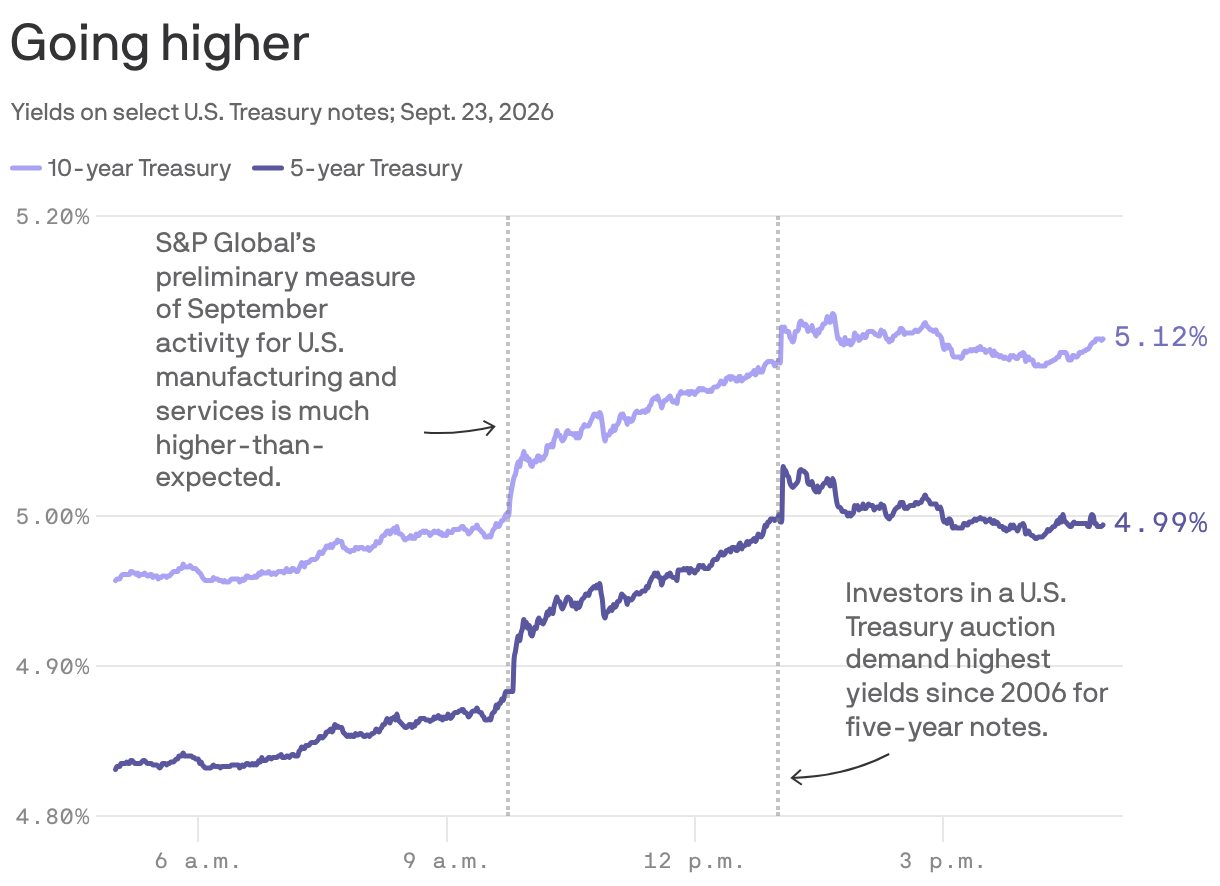
Treasury yields have increased, with the 30-year bond reaching its highest level since 2004. This rise follows strong economic reports from September, indicating robust activity in manufacturing and services, alongside rising inflationary pressures.
Why it matters
The rise in Treasury yields and inflation could impact borrowing costs and economic policy decisions.
How this story affects people
How does this story affect you if you are considering taking out a loan or mortgage?
Higher Treasury yields often lead to increased borrowing costs, which means you may face higher interest rates on loans and mortgages. This could make it more expensive for you to finance a home or other large purchases.
How does this story affect you if you are an investor in bonds?
The rise in Treasury yields can decrease the value of existing bonds in your portfolio, as newer bonds are issued at higher rates. This may prompt you to reassess your investment strategy and consider the potential for lower returns.
Want this written about you?
The breakdown above is the shared version, for kinds of people. In the app, Ripple uses your job, your city, and your family, then writes that part about you.
Get your RippleMore stories
- EconomyATO reports 25% of large companies paid no tax; many homebuyers using deposit scheme
- EconomyAssessment of the Achievability of the American Dream for Younger Generations
- EconomyUS Inflation Report Shows Lower Personal Consumption Expenditures Index
- EconomyHouse Prices Decline in Brisbane and Sydney as National Values Drop