Treasury yields rise as investors seek higher returns for lending
Axios · July 23, 2026Original source ↗
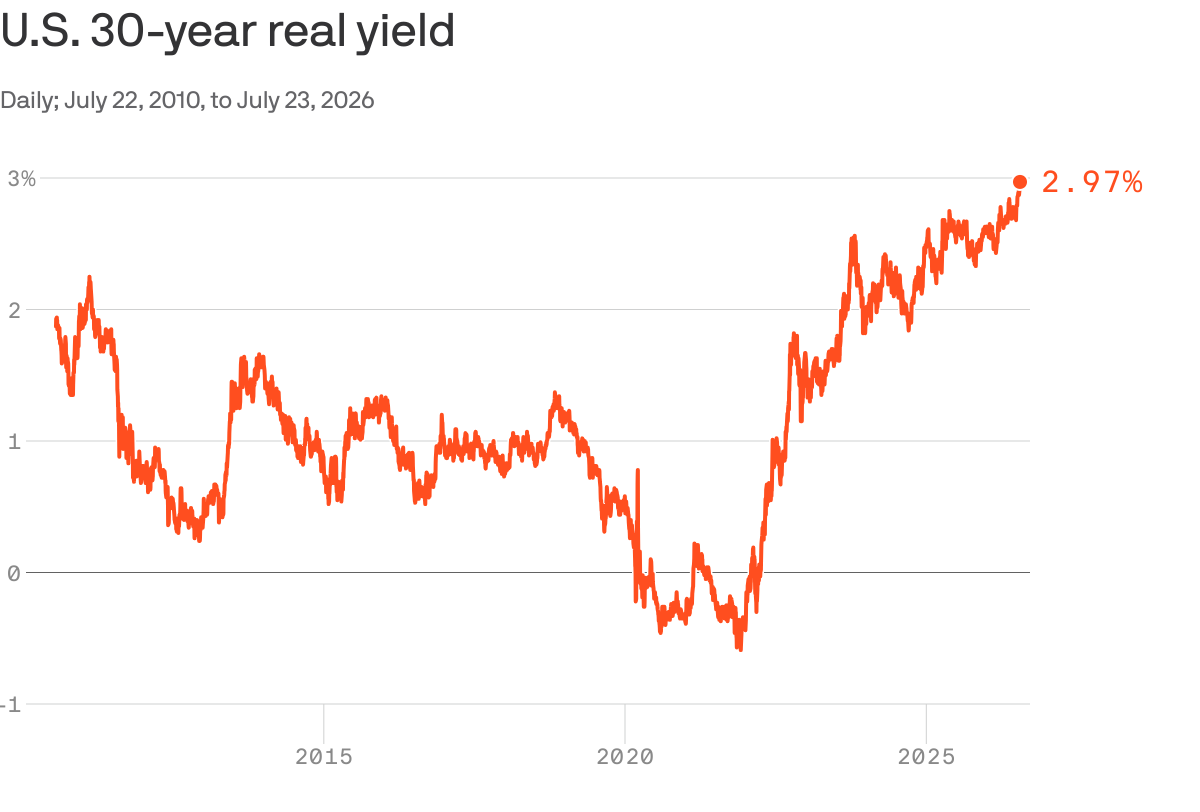
What happened
Treasury yields have increased significantly, with the 10-year yield exceeding 4.7%, driven by strong demand for capital to cover fiscal deficits and investments. The bond market is reflecting a shift as borrowers face increased competition for funds, leading to higher costs for loans. Inflation expectations remain stable, but the rising yields indicate a change in the dynamics of the capital markets.
Why it matters
Higher Treasury yields could increase costs for government debt and limit mortgage rate decreases for homebuyers.
How this story affects people
How does this story affect you if you rent your home?
Higher Treasury yields may lead to increased borrowing costs for landlords, which could result in higher rent prices as property owners pass on costs to tenants.
How does this story affect you if you are a homeowner?
As Treasury yields rise, mortgage rates may not decrease as much as expected, making it more expensive for homeowners to refinance or for potential buyers to secure loans.
How does this story affect you if you are a small business owner?
Increased competition for funds and higher borrowing costs could make it more challenging for small business owners to secure loans for expansion or operational needs.
Want this written about you?
The breakdown above is the shared version, for kinds of people. In the app, Ripple uses your job, your city, and your family, then writes that part about you.
Get your RippleMore stories
- FinanceUK long-term borrowing costs rise as global bond markets experience turmoil
- FinanceRBA warns about risk of negative equity for recent borrowers with large loans
- FinanceFed watchdog reports no criminality in renovation project investigation
- FinanceTreasury Department to auto-enroll children in investment accounts